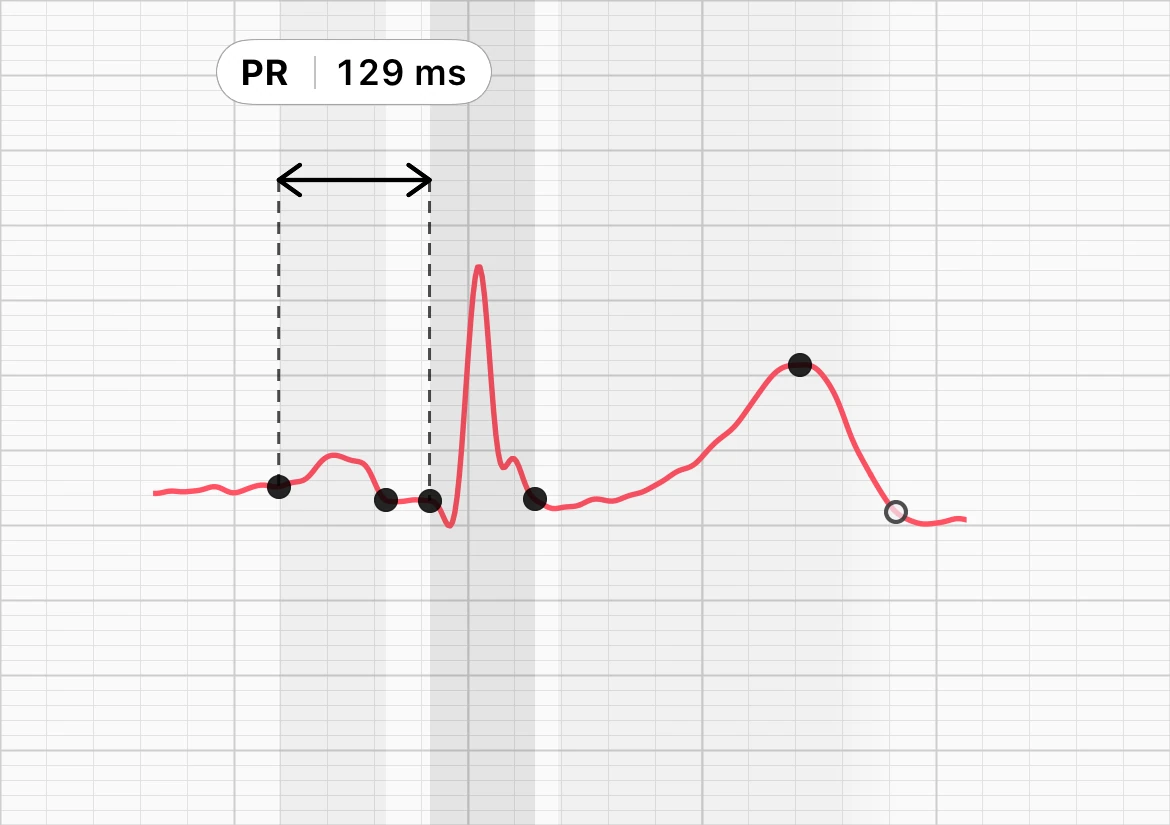
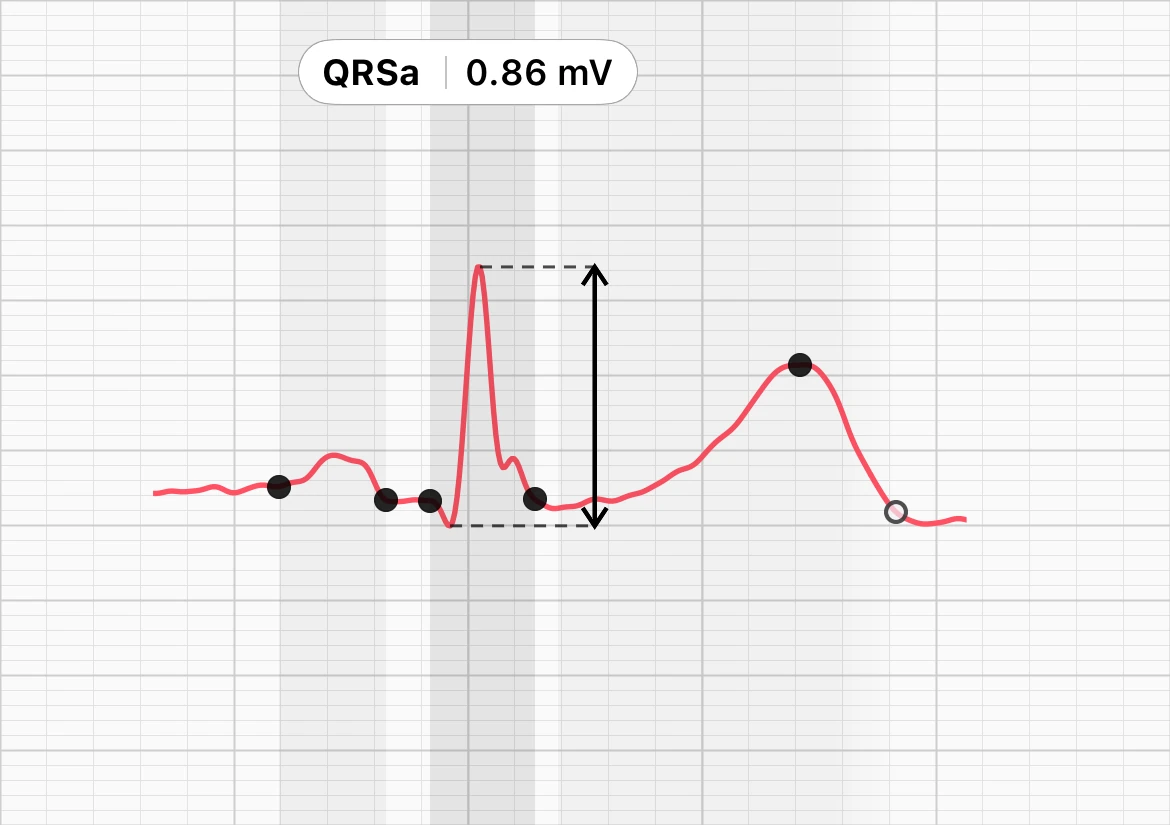
The QRS complex is the part of the ECG most people picture: the tall, sharp spike of each beat. How long it lasts says a lot about how the signal travels through the lower chambers.
What QRS duration measures
The QRS is drawn by the activation of the ventricles, the large lower chambers. Normally the signal travels down a fast conduction system, so all of the muscle is activated quickly and the QRS is narrow.1 QRS duration runs from the first deflection of the QRS to the point where it returns to the baseline.
QRS duration on a real beat
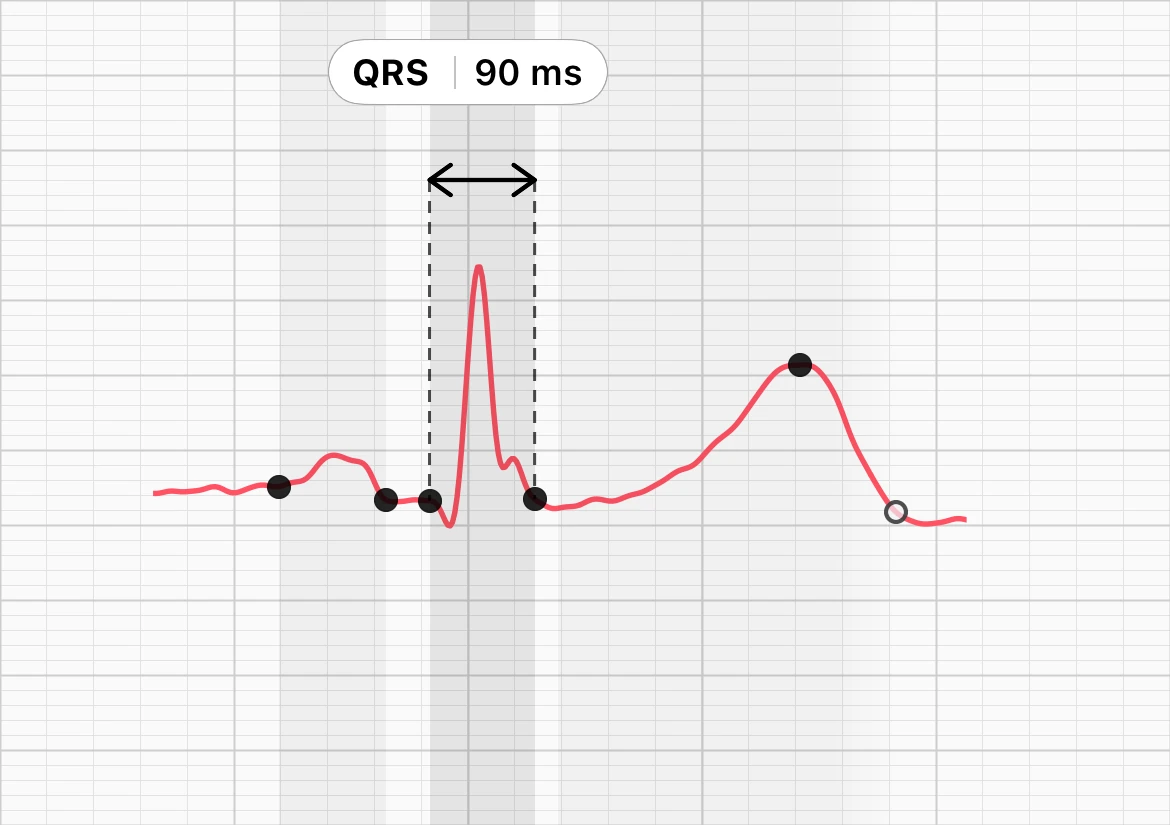
In the Beat Morphology view, ECG Tracker+ marks the start and end of the QRS on a representative beat, so you can see which part of the spike was measured.
Typical range
| QRS duration | What clinical references describe |
|---|---|
| About 70 to 100 ms | The typical adult range1 |
| 100 to 120 ms | Slightly prolonged, sometimes called an incomplete block or a conduction delay2 |
| 120 ms or more | Wide QRS2 |
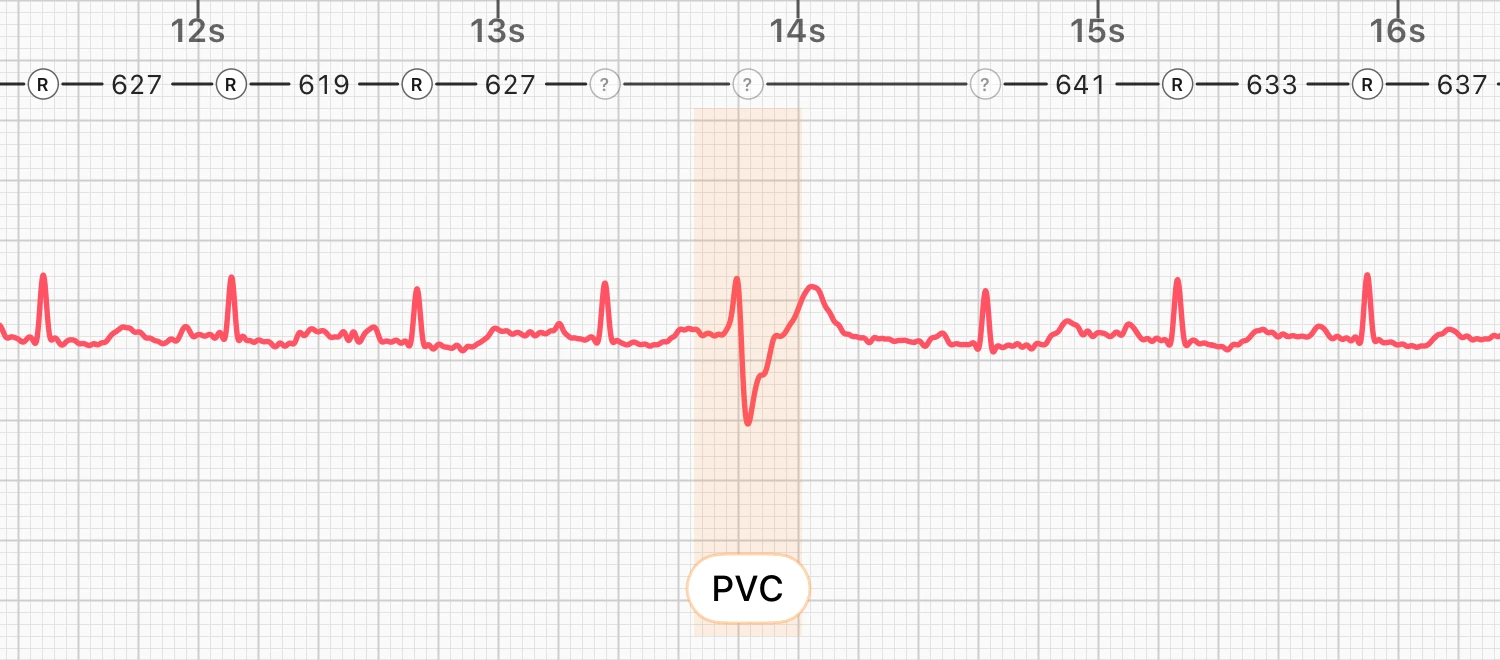
A wide QRS means the lower chambers were activated more slowly than usual. It can happen with a bundle branch block, where one of the main conduction branches is slow, or with a beat that started in the ventricles, such as a PVC.1 ECG Tracker+ marks a possible wide QRS when the beats of a recording look consistently wide, as a cue for review. The wide QRS guide shows a real example.
Single lead and QRS width
The start and end of the QRS are not equally clear in every lead. On a single lead, part of the QRS can run close to the baseline, so the measured width can be slightly shorter or longer than on a 12-lead ECG. In a study of healthy volunteers, QRS measured by hand on Apple Watch recordings differed from lead I of a 12-lead ECG by about 7 ms on average.3
A QRS outside a typical range is not a diagnosis, and a wide QRS on a watch recording needs a 12-lead ECG to confirm. If a measurement concerns you, talk to a clinician.
Frequently asked questions
What is a normal QRS duration?
A typical adult QRS lasts about 70 to 100 ms.
What does a wide QRS mean?
A QRS of 120 ms or more is considered wide. It can come from a bundle branch block or from a beat that started in the lower chambers. A clinician can tell which with a 12-lead ECG.
Can a PVC make the QRS wide?
Yes. A PVC starts in the lower chambers, so its QRS is usually wide. The PVC guide shows what that looks like.