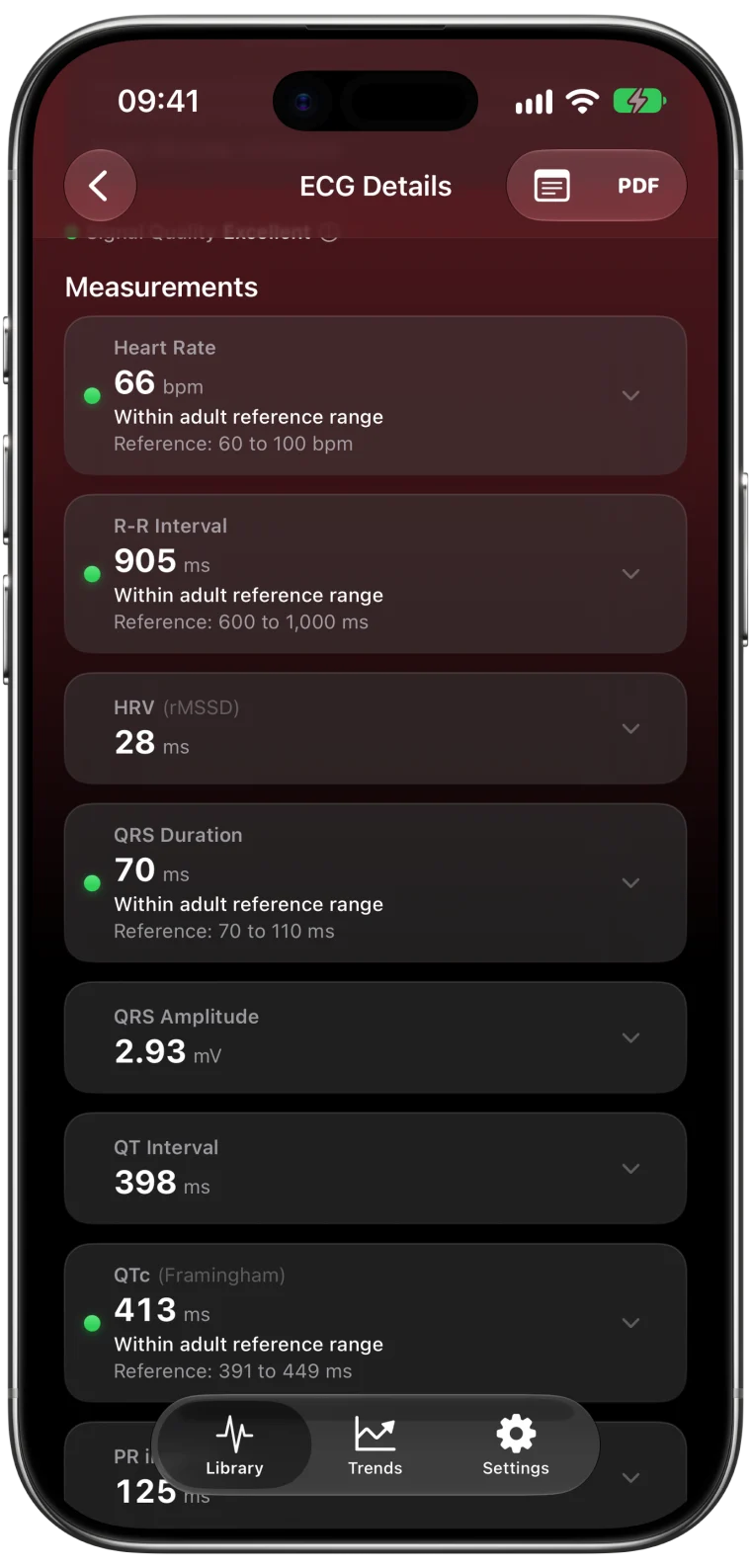
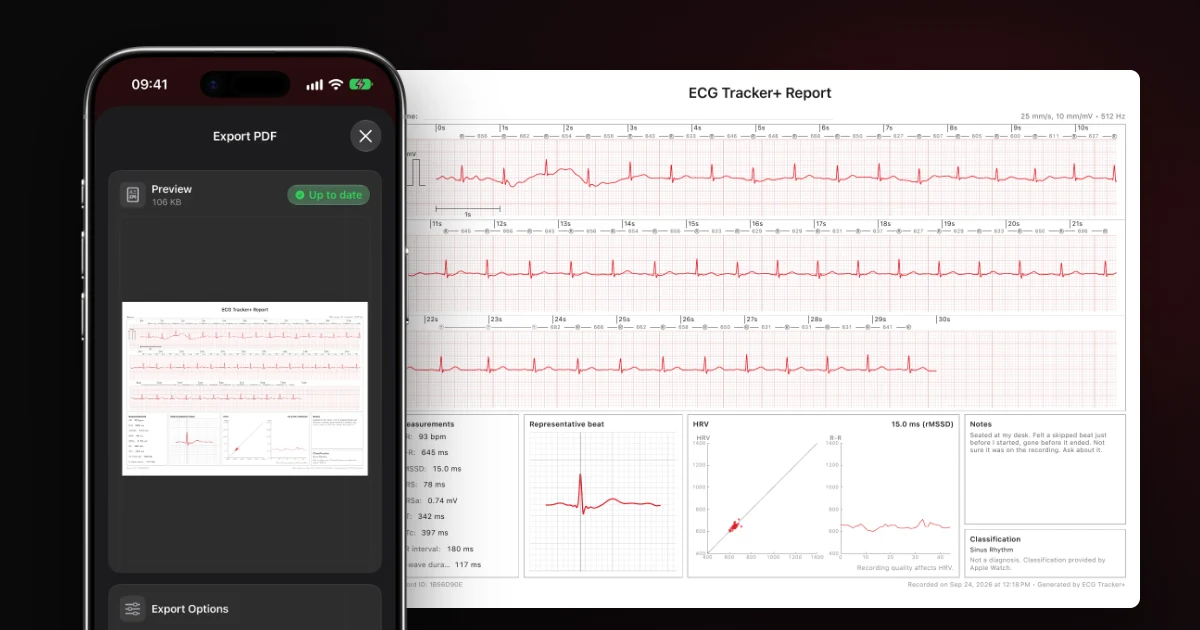
Imagine you exported a PDF in August with a QTc of 421 ms. In October, after an update, the same ECG shows 414 ms in the app. Both numbers describe the same 30 seconds of your heart's activity. What changed is the software's reading of that recording, not your heart.
Why software can read the same ECG differently
Many ECG measurements depend on where exactly a wave starts or ends. The R peaks behind heart rate are sharp and easy to place. The end of the T wave, which decides QT, is often a gradual slope, and small differences in where it is placed move the result.1
This is true for people as well as software. Experienced readers measuring the same tracing can disagree by several milliseconds. When an update improves how the app places these landmarks, some values on older recordings move a little.
Your recording in Health is untouched
The ECG saved by your Apple Watch is stored in Apple Health, and ECG Tracker+ only reads it. An update never edits that original waveform or Apple's classification.2
That is also why a changed value does not describe a change in your heart. It is a different analysis of a recording made at an earlier time. For the same reason, a newer number is not automatically the "true" one. It reflects the current version of the method.
Compare like with like
Before comparing an old value with a new one, make sure the comparison is fair.
- Same recording. Match the date, time and duration of the ECG.
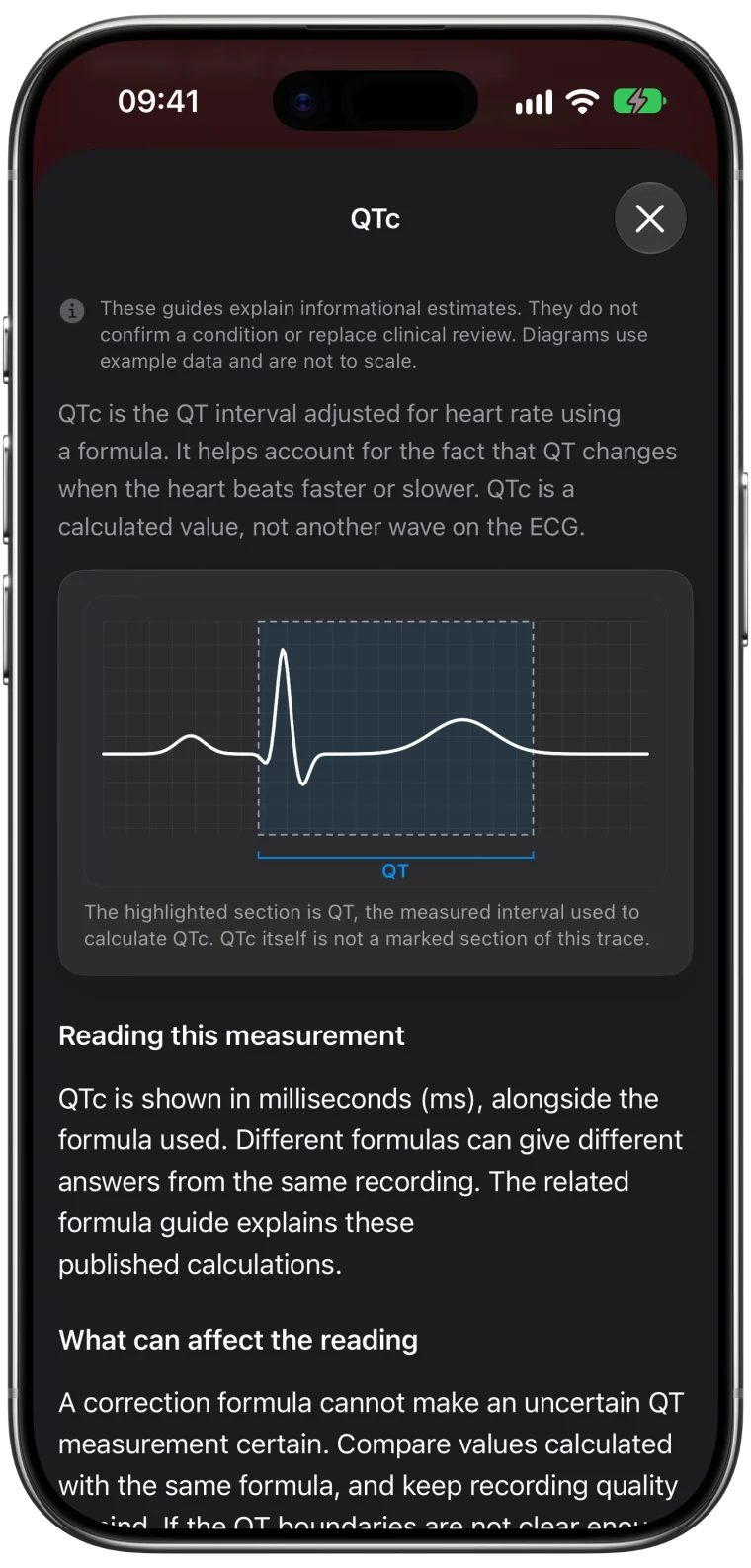
- Same measurement. QT and QTc are different values, and QTc depends on the correction formula.
- Same formula. Two QTc values can differ only because one used Bazett and the other Fridericia. The QTc guide shows how large that gap can be.
- Same source. Note whether a value was calculated automatically or adjusted manually.
- Known report date. An exported PDF shows the value at the moment it was created, which may be long after the recording.
Where to find the version and formula
The current app version and build are in Settings → Help & Legal → About. Your default QTc formula is in Settings → Analysis → Default QTc formula.
The current default does not necessarily tell you which formula an older report used. Check the formula printed next to the value in that report. If you cannot tell which version produced an old result, leave it as unknown rather than guessing.
Keep the evidence for a clean comparison
If a difference matters to you, keep the original ECG in Health and the earlier PDF. Deleting and re-importing recordings makes the history harder to follow and does not restore an earlier analysis.
When you contact support, name the recording date and time, the measurement, the old and new values, the formula and any versions you know. For example: "The ECG from 12 August at 10:14 shows QTc 421 ms in my August PDF and 414 ms in the app today, both with Fridericia."3
Support can explain how the software produced a number. A healthcare professional should assess what a value means for you, especially if you have symptoms or take medicines that affect QT.
Frequently asked questions
Did my heart change if the QTc changed after an update?
No. The update re-analyzed the same recording. A new value describes a new reading of an old ECG, not a later change in your heart.
Which value should I trust, the old one or the new one?
Neither value is a clinical measurement. The newer one reflects the current method. If a value matters for your care, a clinician can measure QT on a standard ECG.
Can I keep the old value?
Yes. A PDF you exported keeps the values from the time of export. Keep it alongside the original ECG if you want both.