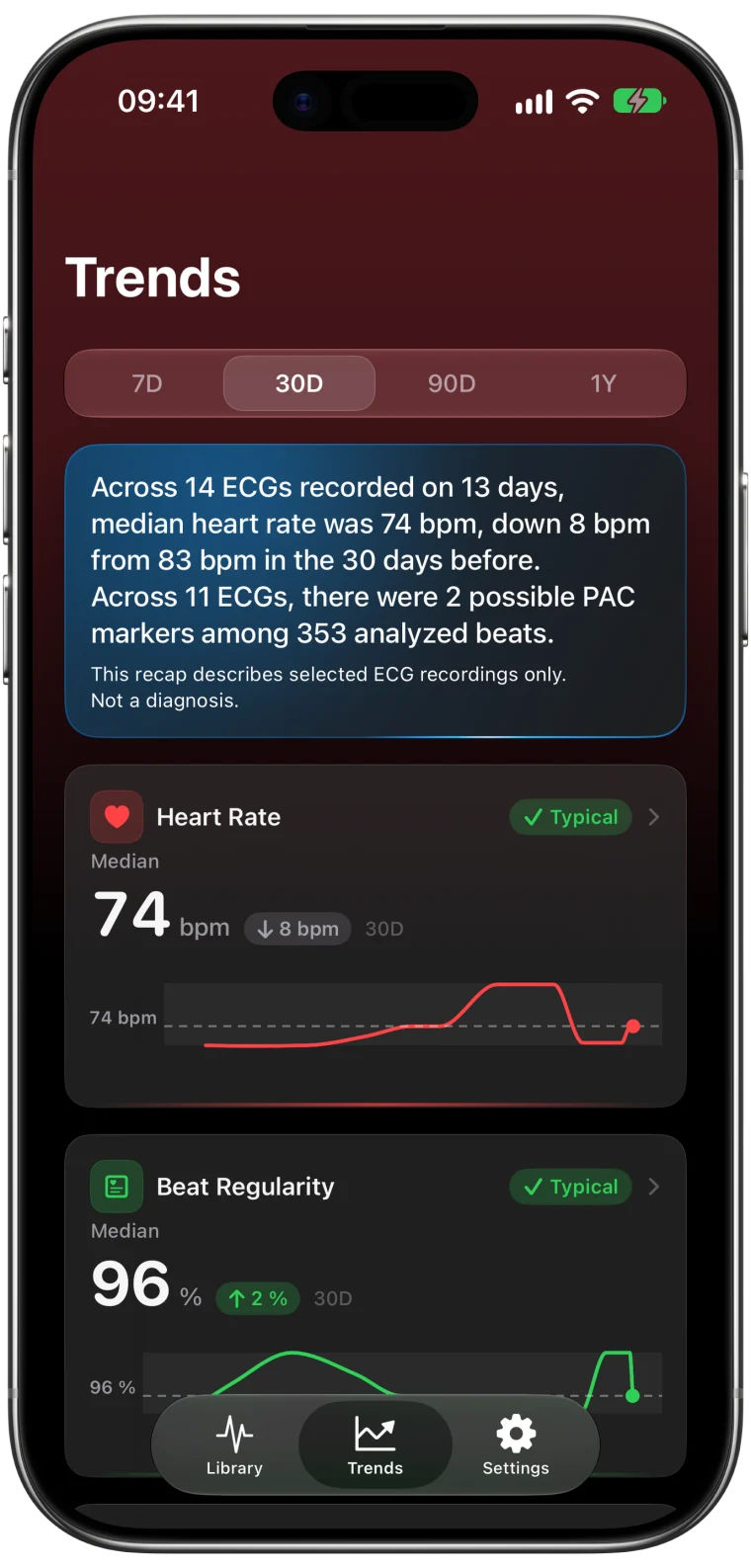
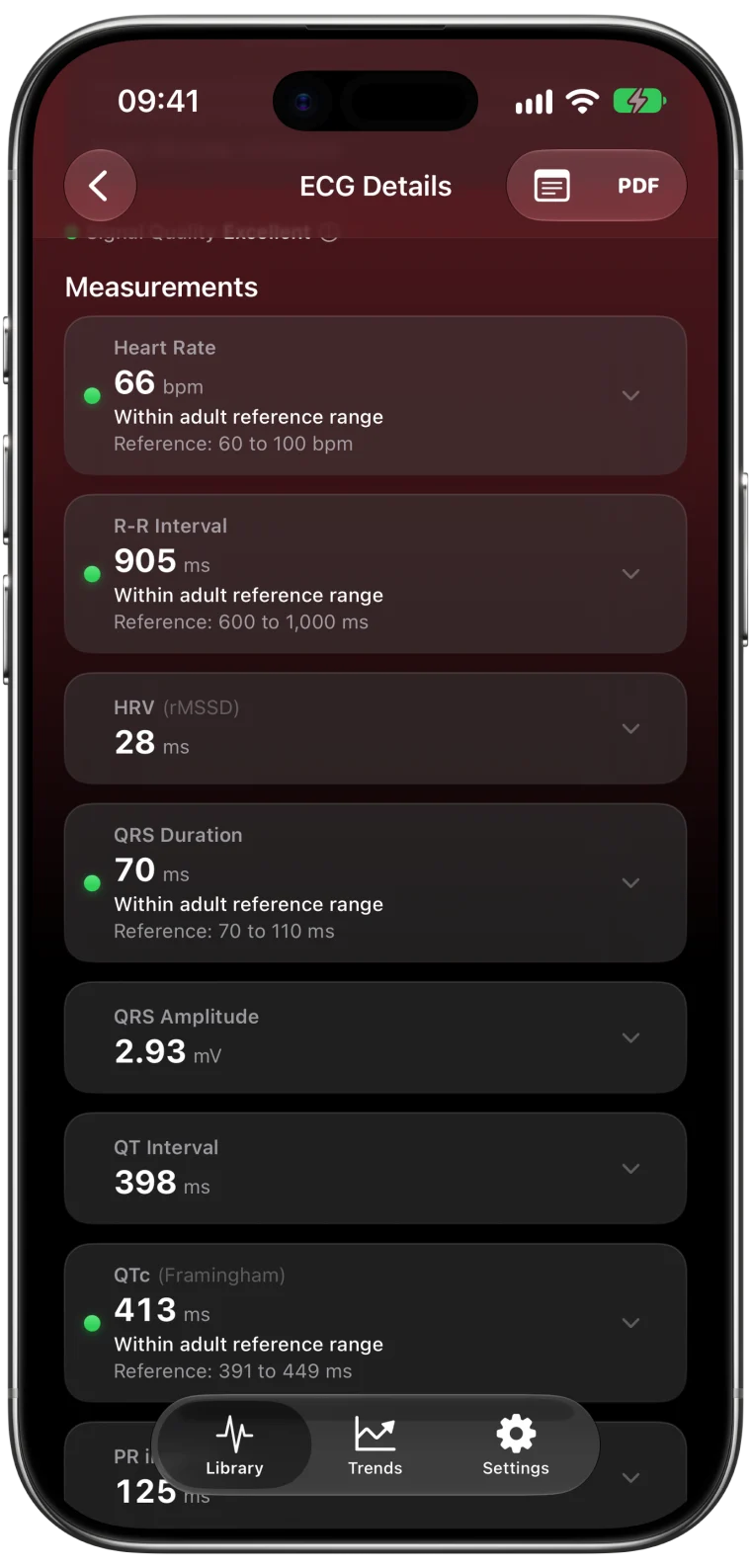
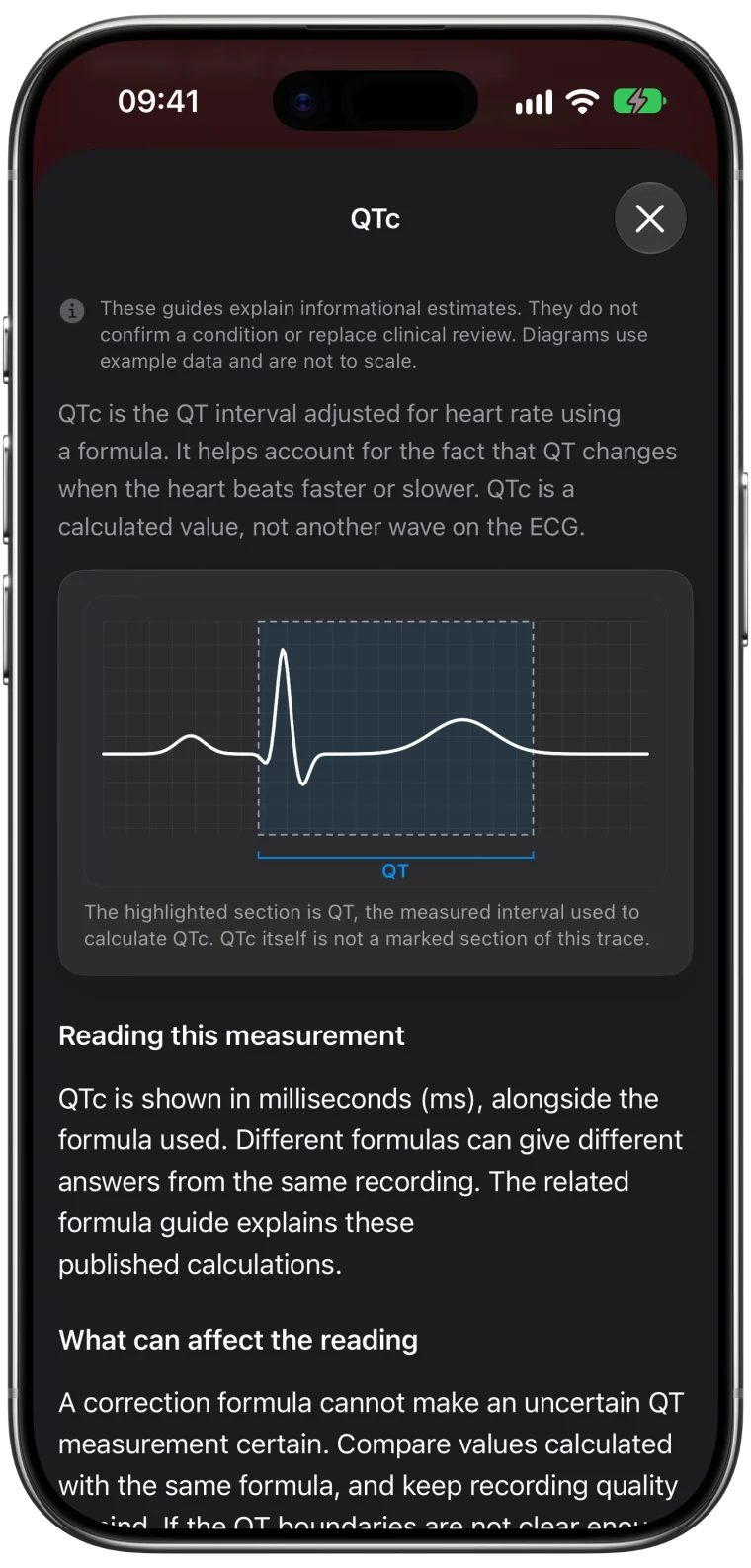
Imagine your QTc estimate is 413 ms. Is that good? It depends on the question. Compared with typical adult values, it sits comfortably inside the usual range. Compared with your own earlier recordings, it may be a little higher than your median. Both statements are true, and together they tell you much more than either one alone.
What a reference range is
A reference range describes where most values fall in a large group of healthy adults. For example, a resting heart rate of 60 to 100 beats per minute is the conventional adult range.1
Reference ranges are general. Many healthy people sit outside them. A trained athlete may have a resting heart rate in the 40s or 50s, and that can be completely normal for them.1 Some ranges also differ by age or sex, and different sources draw the lines slightly differently.
ECG Tracker+ shows the reference range next to many measurements, for example "Reference: 60 to 100 bpm", with a dot that shows whether the value falls inside it.
What your personal range is
Your personal range comes from your own earlier ECGs, measured the same way. It shows what is usual for you.
For some measurements, ECG Tracker+ shows where a new value falls among your previous comparable recordings, such as "8 ms above your median". It also tells you how many earlier recordings the comparison is based on.
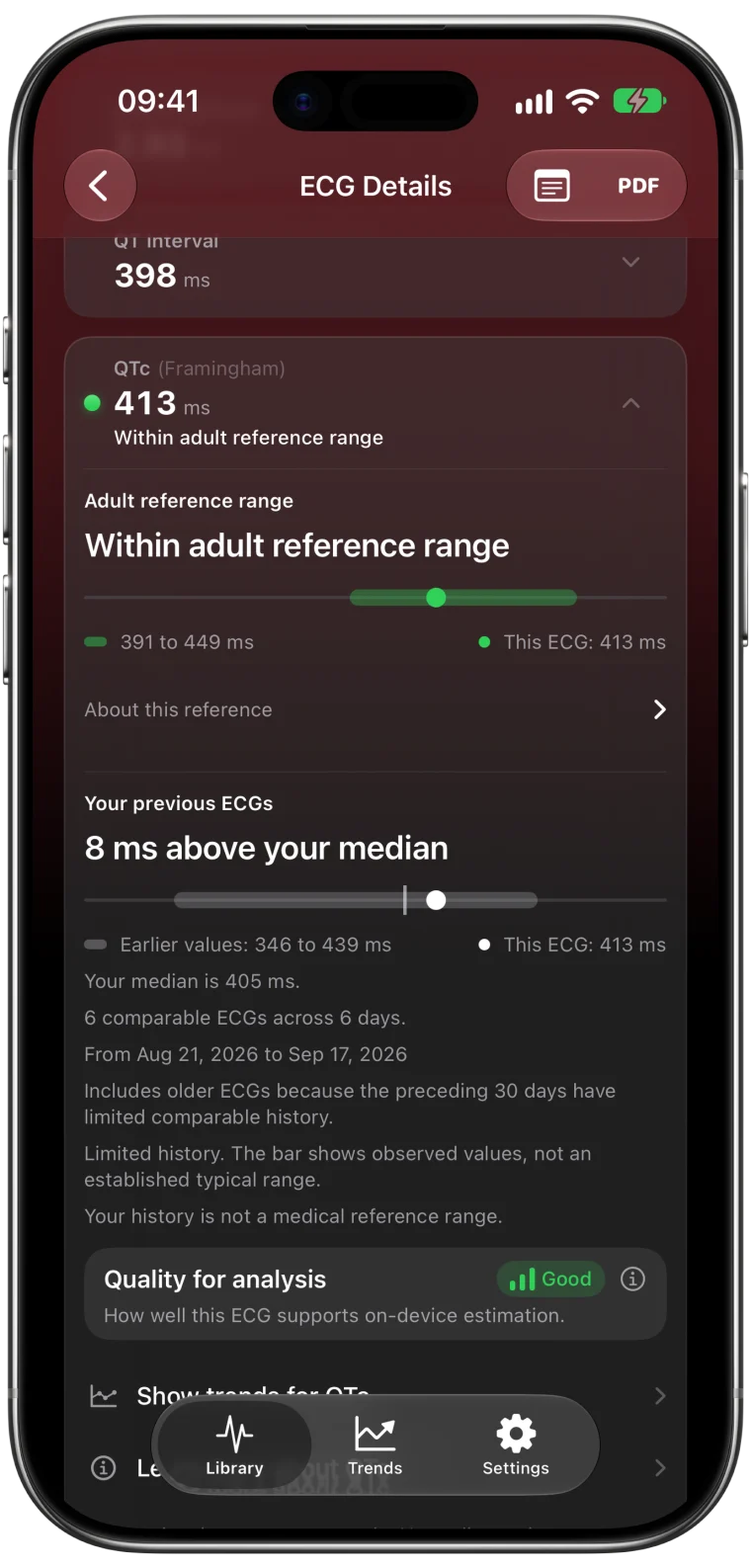
A personal range is only as good as the recordings behind it. Six recordings over a week tell you less than forty over several months, and the app says when history is limited.
Why you need both
| Question | Which comparison answers it |
|---|---|
| Is this value typical for adults in general? | Reference range |
| Is this value typical for me? | Personal range |
| Has something changed compared with my usual recordings? | Personal range and Trends |
| Does this value mean I am healthy or unwell? | Neither. That needs a clinician. |
A value inside the reference range can still be unusual for you. A value outside it can be your normal. Seeing both helps you notice changes without jumping to conclusions.
Keep the comparison fair
Personal comparisons work best when recordings are similar. Record at a similar time of day, in a similar position and after a few minutes of rest. Leave out recordings made by someone else, as the exclusion guide explains.
A reference range does not prove that your heart is healthy, and a value outside it does not mean something is wrong. If a change worries you or you have symptoms, discuss your recordings with a clinician.
Frequently asked questions
What is a normal resting heart rate on an ECG?
For adults, 60 to 100 beats per minute is the conventional resting range. Athletes and some healthy people are lower, and heart rate rises naturally with activity and stress.
Why does ECG Tracker+ say my history is limited?
Personal comparisons need enough earlier recordings measured the same way. With only a few, the app tells you so, because a small history can be misleading.
Where do the reference ranges come from?
They follow commonly used adult ranges from clinical references. Different textbooks may set slightly different limits, so treat each range as a general guide.